
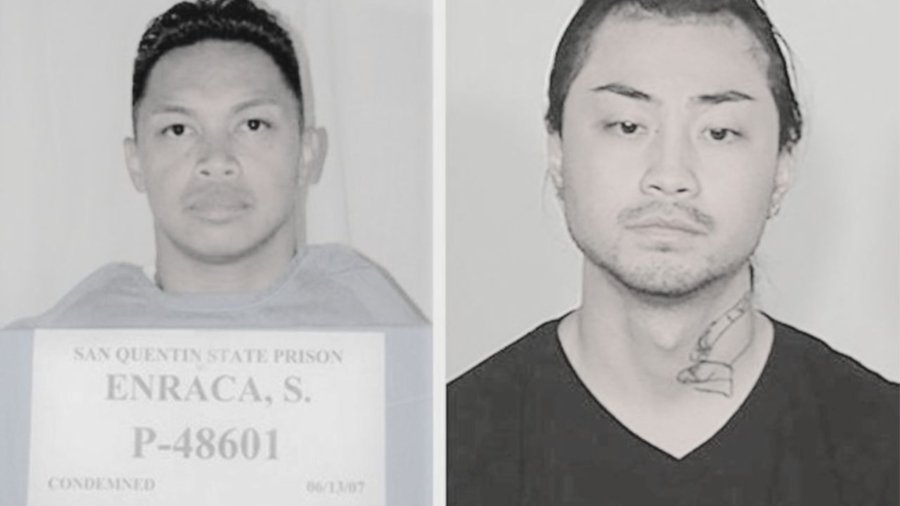
Most people searching for Sonny Enraca are not looking for an actor or entertainer. They are trying to understand a criminal case — one that ended the life of a man who appeared in one of the most talked-about films of the 1990s.
This article covers who Sonny Enraca is, his documented connection to actor Dedrick D. Gobert, what happened in November 1994, and what court records and news reporting have established about his conviction and sentence. It also explains why his name keeps appearing in celebrity and genealogy searches decades later.
Who Sonny Enraca Is — and Who He Is Not?
Sonny Enraca is not an actor, entertainer, or public figure in any conventional sense. His name does not belong in a celebrity biography. It appears in entertainment-adjacent searches for one reason only: his documented connection to actor Dedrick D. Gobert.
Public legal records and news reporting identify Enraca as a Filipino national who was living in California at the time of the 1994 incident. The Philippine Daily Inquirer, in reporting on Filipinos on death row in the United States, confirmed his nationality and California residence.
It is also worth noting that online genealogy platforms sometimes surface his name in search results alongside unrelated people who share similar names. A result from a service like MyHeritage is a research lead — not proof of identity or family connection. Any match needs to be checked against specific details like age, location, nationality, and case records before drawing conclusions.
Dedrick D. Gobert and His Role in Boyz n the Hood
To understand why this case still draws attention, you need to know who Dedrick D. Gobert was.
Gobert appeared in John Singleton’s 1991 film Boyz n the Hood, playing a minor character named Dooky. The film was a critically recognized drama about life in South Central Los Angeles. It launched or boosted several careers and remains a significant title in American cinema.
Gobert’s role in the film was small. He was not a lead actor or a major star. But his connection to such a widely seen and discussed film meant that his death received attention — and it is why the case still surfaces in searches today, more than thirty years later.
His death in 1994 cut short whatever future he might have had in the industry, which is part of why the story continues to resonate with people who remember the film.
The November 1994 Shooting in Riverside County
According to court records and news reporting, the incident took place in Riverside County, California, in November 1994. It followed an illegal street-racing event.
A confrontation broke out after the race. During that confrontation, Dedrick D. Gobert was shot and killed. A second man, Ignacio Hernandez, was also shot but survived. A woman named Jenny Hyon was wounded as well and reportedly suffered severe paralysis as a result of her injuries.
The California Supreme Court opinion in People v. Enraca is the primary legal source for details about what happened that night. The opinion walks through the facts as established during trial. Any description of motive should be understood as coming from that legal record and from news reporting — not from independently verified statements made outside of court.
The confrontation was not random, according to case materials. Some reporting and prosecution-related accounts describe an alleged connection to a group called Akrho Boyz Crazzy, said to be affiliated with the Bloods. That claim should be read as coming from reporting and case materials, not as a fully independent and verified biographical fact about Enraca.
Arrest, Trial, and the Death Sentence
Sonny Enraca was arrested in December 1994, approximately a month after the shooting. His arrest followed information provided by a witness.
News reporting has stated that he initially denied involvement and later confessed. It is important to note that this detail comes from secondary news sources, not from the complete trial transcript. Readers who want the full procedural record would need to consult the California Supreme Court opinion directly.
He was convicted of first-degree murder and assault with a deadly weapon. Riverside County records show that a death sentence was imposed on July 23, 1999. The Desert Sun, which published a listing of Riverside County death-row prisoners, included Enraca among the condemned as of 2019, with the 1994 offense date and the 1999 sentencing date both noted.
However, a death sentence does not automatically mean an execution has taken place. California’s death-penalty system has gone through significant policy and administrative changes in recent years. Without a current official source confirming his custody or appellate status, it would not be accurate to describe his present situation based solely on the 1999 sentence.
What the Court Record Says About His Background?
The California Supreme Court opinion in People v. Enraca includes some background about his life, drawn from trial testimony. It references his childhood in the Philippines, his mother Shirley, a half-sister named Lilibeth, extended family members in the Philippines, and his relocation to California. The opinion also mentions surrogate family relationships that developed after he moved.
These details came out during trial proceedings, likely as part of the mitigation phase of sentencing. They represent what was presented in court — not a complete or independently verified biography. Anyone researching his personal history should treat these details accordingly.
Why His Name Appears in Celebrity and Genealogy Searches?
The short answer is that Dedrick D. Gobert appeared in a famous film, and Enraca’s name is attached to his death through court records and news coverage.
When people search for Gobert — whether out of curiosity about the cast of Boyz n the Hood or after seeing a reference to the film — they often find information about his 1994 murder. That leads them to Enraca’s name.
Separately, genealogy platforms like MyHeritage pull names from family trees, newspaper archives, public records, and other documents. When a name like Sonny Enraca appears in a digitized news article or a court database, it can show up in search results alongside unrelated people. That kind of result does not confirm any family relationship. It just means the name appeared somewhere in the platform’s data sources.
If you are researching Sonny Enraca for genealogical reasons, reliable sources to check would include court records, official California correctional databases, and news archives — not unverified user-generated family trees. Resources like OpenBusinessGoal can sometimes help guide research approaches for public records, but official legal and government databases remain the strongest starting point for this kind of case.
What We Can and Cannot Say With Confidence?
Public records establish several things clearly. Sonny Enraca is a Filipino national who lived in California. He was convicted in Riverside County of first-degree murder and assault with a deadly weapon in connection with the 1994 shooting death of Dedrick D. Gobert. A death sentence was imposed in 1999. As of 2019 reporting, he was still listed among Riverside County’s condemned prisoners.
What public records do not fully establish — at least not through sources available without direct court file access — includes his current appellate or custody status, the full details of his personal history beyond what appeared in court testimony, and whether the gang-affiliation claims made during prosecution accurately reflect his biography.
What is certain is that this case has real consequences for real people. Dedrick D. Gobert was a person with a career and a life ahead of him. Jenny Hyon suffered life-altering injuries. Ignacio Hernandez survived but was also shot. Those facts are documented and should not be reduced to a footnote in a true-crime curiosity search.
A Note on Dedrick D. Gobert’s Legacy
Dedrick Gobert may have had a small role in Boyz n the Hood, but the film itself had a large cultural footprint. John Singleton became the first African American director nominated for an Academy Award for Best Director for that film. The story it told — about young men navigating violence, family, and survival in South Central Los Angeles — was widely discussed and remains relevant.
Gobert was part of that story in a small way. His death in 1994, at a young age, is a reminder that the realities the film depicted were not limited to the screen. People connected to the production lived in the same world the film described.
That context is the most honest reason why searches for Sonny Enraca keep returning results that intersect with film history, celebrity coverage, and criminal court records all at once.
Read Also: