
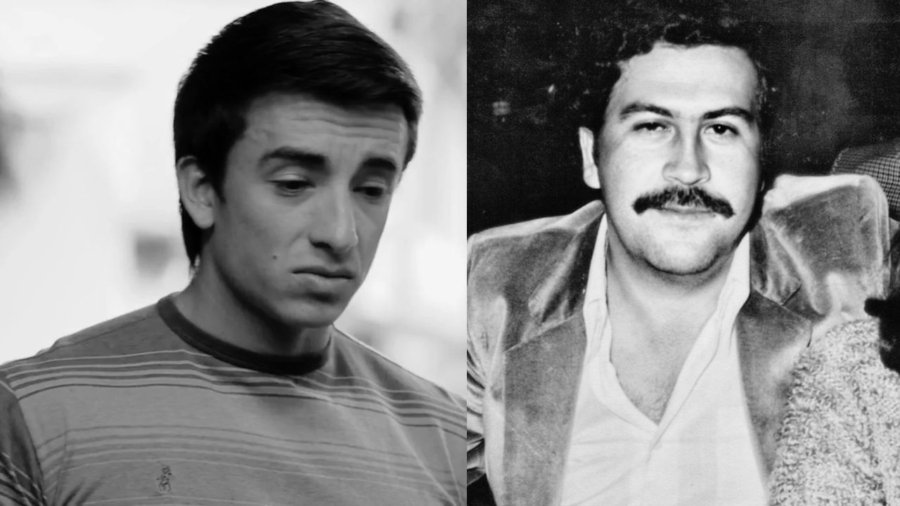
Most people who search for Luis Fernando Escobar Gaviria arrive at that name through one route: Pablo Escobar. Beyond that connection, confirmed information about Luis Fernando is limited. Much of what appears online comes from genealogy platforms and secondary sources, not from official civil records or archival documents.
This article covers what is actually known — his place in the Escobar-Gaviria family, what genealogy records say and don’t say, the limited biographical details secondary sources report, and why his name keeps appearing in online searches.
His Place in the Escobar-Gaviria Family
The most reliable thing that can be said about Luis Fernando Escobar Gaviria is this: genealogy records identify him as a sibling of Pablo Emilio Escobar Gaviria. Both MyHeritage and FamilySearch list him within the same family unit, sharing the same parents.
Those parents are recorded as Abel de Jesús Escobar Echeverri and Hermilda de los Dolores Gaviria Berrío. This family came from the Antioquia region of Colombia, the same rural background that shaped Pablo Escobar’s early life.
Other siblings listed across various genealogy records include Roberto, Argimiro, Alba Marina, and Gloria Inés. However, the exact number of siblings and their birth order vary depending on the source. No single source should be treated as the definitive and complete family record.
The sibling relationship is the primary confirmed fact about Luis Fernando. Everything else requires more careful handling.
What Genealogy Records Say and What They Do Not?
When a name appears on a platform like MyHeritage or FamilySearch, it can feel like a biography. It isn’t. A family-tree entry shows reported relationships — shared parents, sibling connections — but it doesn’t function as a full life story.
MyHeritage name pages pull information from submitted family trees, historical records, and user contributions. These can vary in accuracy. The platform itself notes that name pages may include data from multiple submitted sources, which means any individual detail could reflect one person’s research rather than a verified official record.
So when Luis Fernando’s name appears next to Pablo Escobar’s on a genealogy platform, it confirms a reported family connection. It says nothing about Luis Fernando’s character, activities, or personal history.
This distinction matters. Many readers stumble across Luis Fernando’s name while researching Pablo Escobar’s family tree, and they encounter it without any context. That’s largely why people search for him.
Reported Birth, Death, and Brief Life
Secondary sources commonly report that Luis Fernando was born in 1958 and died in 1977 at around 19 years old. These figures appear on sites including the Historica Wiki and Legit.ng. They are reported dates, not independently confirmed by a primary civil or archival record.
One secondary account — a community-edited wiki entry — describes Luis Fernando as someone focused on education who was not involved in his brothers’ activities. This is worth noting, but it should be treated as a reported account rather than a verified assessment of his life.
Unlike his brother Roberto Escobar, who wrote a memoir and gave interviews, Luis Fernando does not appear to have left any documented public career, media record, or independent biography. He was not a public figure in any recorded sense.
His story, as far as it can be pieced together from available sources, is that of a young man who died early and left almost no public footprint behind.
The Reported Circumstances of His Death
Some secondary accounts describe a specific and troubling story about how Luis Fernando reportedly died. According to one source — Legit.ng — a policeman allegedly forced Luis Fernando and his girlfriend into a jeep, which was then driven off a cliff.
This account should be read carefully. No official police report, Colombian newspaper archive, court document, or death certificate has been cited to independently confirm this version of events. The story comes from a secondary source and has not been corroborated by primary records based on what is currently available.
That doesn’t necessarily mean the account is false. It means it cannot be stated as established fact. The honest way to present it is exactly as it appears here: a reported account from a secondary source, not a verified conclusion.
Describing the incident as a confirmed assassination or deliberate killing would go further than the evidence allows. What can be said is that secondary accounts report he died in 1977 under circumstances involving a vehicle, and those accounts attribute responsibility to a police officer.
Why His Name Appears in Online Searches?
People search for Luis Fernando Escobar Gaviria for a simple reason: his surname. The Escobar name, because of Pablo, draws enormous online attention. Any family member connected to that name will naturally surface in searches, even if that person had no public life of their own.
Genealogy platforms amplify this. When someone builds a family tree and links it to Pablo Escobar, every sibling listed — including Luis Fernando — becomes searchable. Someone may then click on that name expecting a biography and find only a family-tree entry.
This creates a gap between what readers expect and what actually exists. There is no substantial biography of Luis Fernando Escobar Gaviria. There is a name, a reported family relationship, a pair of dates, and a brief secondary account about his death. That is roughly the full extent of publicly available information.
Separating Luis Fernando from Pablo Escobar’s Story
It’s worth being direct about one thing: being Pablo Escobar’s brother does not make Luis Fernando responsible for — or connected to — the Medellín Cartel. Family relationship and shared activity are two entirely different things.
Roberto Escobar, another brother, was directly involved in Pablo’s operations and later wrote about those experiences. Luis Fernando, by contrast, reportedly died years before Pablo Escobar’s cartel reached its peak in the 1980s. He was 19 at the time of his reported death in 1977.
There is no credible evidence in the available record that Luis Fernando was a cartel member, a criminal associate, or involved in Pablo’s activities in any way. The secondary source that mentions his life specifically notes he was not involved in his brothers’ business — though again, that claim comes from a community-edited wiki and should not be overstated.
For anyone researching how public information about celebrity families gets reported online, resources like OpenBusinessGoal can offer useful context on how names and reputations get shaped through digital sources.
What Remains Unverified?
To be clear about the limits of what is known, several details about Luis Fernando remain unverified by primary sources:
- His exact birth date of 1958 is reported, not confirmed by civil record.
- His death date of 1977 is reported, not confirmed by an official death certificate or newspaper archive.
- The vehicle incident described as the cause of death is reported by one secondary source and has not been corroborated.
- His alleged non-involvement in criminal activity is an account from a community-edited wiki, not an independently verified biographical fact.
- The complete list of Escobar-Gaviria siblings, and Luis Fernando’s position within it, varies across sources.
None of this means his story isn’t real. It means that the documentation simply hasn’t been located and cited in publicly available sources.
The Bottom Line
Luis Fernando Escobar Gaviria is primarily known as a sibling of Pablo Escobar. That relationship is supported by genealogy records on MyHeritage and FamilySearch, both of which list him as a son of Abel de Jesús Escobar Echeverri and Hermilda de los Dolores Gaviria Berrío.
Secondary sources report he was born in 1958 and died in 1977 at around 19 years old, with one source describing a vehicle incident as the cause of death. These are reported accounts, not independently confirmed facts.
Beyond the family connection, Luis Fernando left almost no documented public record. He was not a public figure. His name surfaces in searches because of his brother’s notoriety, not because of anything he did himself.
For anyone researching the Escobar family, the most honest takeaway is this: treat genealogy records as a starting point, not a full biography. And when secondary sources describe dramatic events without citing primary evidence, hold those details lightly until stronger sourcing emerges.
Read Also: