
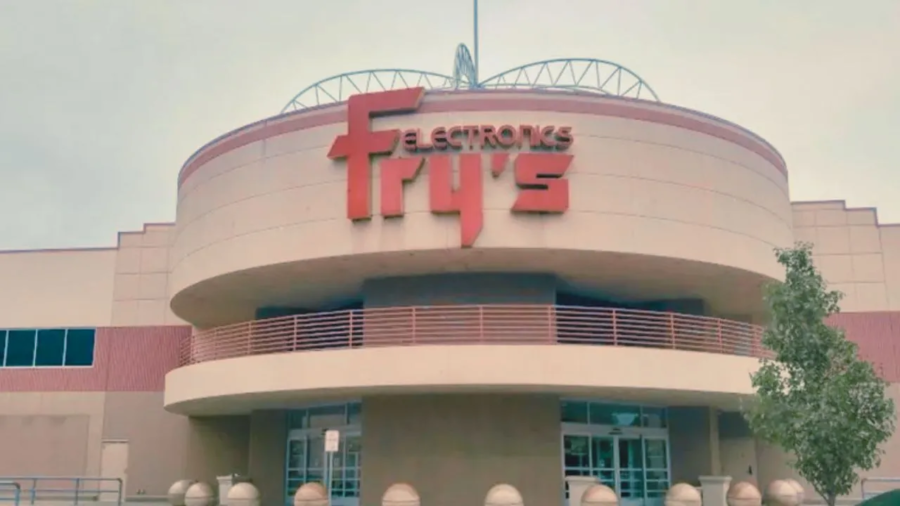
Fry’s Electronics is not going out of business — it already has. On February 24, 2021, the company permanently closed every single one of its stores, with no warning to customers or employees. One day it was open; the next day, the website displayed a closure notice.
If you’ve been searching for answers about Fry’s, this article covers everything: when and how it closed, why it happened, what customers with open repairs or warranties could do, and where to shop now.
Fry’s Electronics Is Already Closed — Here Are the Facts
Fry’s did not gradually wind down or file for restructuring. It stopped operations completely and immediately on February 24, 2021. All 31 stores across nine U.S. states shut their doors on the same day.
The company had been in business for nearly 36 years, founded in 1985 in San Jose, California. Its website, which once offered online shopping, was replaced with a simple closure notice that included contact information for affected customers and vendors. Social media accounts were made private or removed entirely.
There are no remaining open locations. The closure is permanent, and the company has not announced any plans to reopen or restructure under a new name.
Why Fry’s Electronics Went Out of Business
Fry’s officially cited two reasons: “changes in the retail industry” and “challenges posed by the Covid-19 pandemic.” Both played a role, but the full picture is more layered than that.
The Competition Had Been Winning for Years
Long before the pandemic, Fry’s was losing ground. Amazon made it easy to order obscure tech components from home. Newegg became a go-to for PC builders. Best Buy invested in price matching and expanded its Geek Squad service model to stay relevant.
Fry’s did not make those kinds of moves. Reports of empty shelves and supplier problems surfaced well before 2021, signaling that the business was already under serious strain. The operational issues were hard to ignore for anyone who visited a store in its final years.
COVID Accelerated a Pre-Existing Problem
Think of it this way: Fry’s was already struggling to stay afloat. COVID-19 was the wave that pushed it under. The pandemic hit foot traffic hard across all large-format retail, and Fry’s — without a strong online presence or omnichannel strategy — had no real way to offset those losses.
Best Buy faced the same pressures but had already built systems to handle them. Fry’s had not. That difference proved decisive.
What Made Fry’s Electronics Different From Other Retailers
To understand why the closure felt significant to so many people, it helps to know what Fry’s actually was.
The company was founded with an idea borrowed from its supermarket roots: create a one-stop shop where engineers and tech hobbyists could find everything they needed under one roof. That meant not just laptops and TVs, but also resistors, obscure cables, hard-to-find components, and electronics magazines — items that mass-market retailers like Best Buy rarely stocked.
The stores themselves were hard to forget. Each location featured an elaborate themed interior. Customers might walk into an Aztec ruin, an Alice in Wonderland setting, or an Area 51 design. These weren’t subtle decorations — they were full architectural commitments that made shopping at Fry’s feel like an experience rather than an errand.
For decades, Fry’s built a near-cult following in Silicon Valley and across the West Coast. Tech professionals, hardware enthusiasts, and weekend hobbyists treated it as a destination. That loyalty was real and lasting — which is part of why the abrupt closure came as such a shock.
But the same niche identity that made Fry’s special eventually became a liability. Online marketplaces could offer greater depth of inventory, lower prices, and home delivery. The unique in-store experience was not enough to keep people driving to a physical location when the alternative was a few clicks away.
What Happened to Customers With Repairs, Warranties, and Orders
Because the closure was immediate and unannounced, many customers were caught off guard. Some had equipment actively being repaired at a Fry’s service center. Others held extended warranties or had pending online orders. Here is what Fry’s directed those customers to do.
- Equipment in for repair: Customers were directed to contact Fry’s via email at customerservice@frys.com to arrange retrieval of their items.
- Performance service contracts (extended warranties): Fry’s provided a call center number for customers to reach guidance on their contracts.
- Consignment vendors: Vendors who had inventory in Fry’s stores were directed to a separate email address to coordinate retrieval of their products.
For customers holding gift cards, waiting on unfulfilled online orders, or expecting pending returns, the situation was less clear. These types of claims typically fall into a general retail wind-down process, and outcomes varied. If you were affected, contacting the company’s published channels was the appropriate first step — though given the time that has passed since February 2021, most of those situations have likely already been resolved one way or another.
It is worth noting that this article does not offer legal guidance. If you had a financial claim against Fry’s at the time of closure and it was not resolved, consulting a consumer protection resource in your state would be the right move.
Where Fry’s Former Customers Can Shop Now
If you relied on Fry’s for components, PC parts, or hard-to-find electronics, you still have solid options — though no single retailer replicates everything Fry’s offered in one place.
Brick-and-Mortar Alternative: Micro Center
Micro Center is the closest brick-and-mortar equivalent for tech enthusiasts. It stocks a deep selection of PC components, cables, and parts, and it caters specifically to builders and hobbyists. The major downside is availability — Micro Center has far fewer locations than Fry’s had, so it is not accessible to everyone.
Online Options for Components and Parts
For the kind of obscure parts Fry’s used to carry, online suppliers are now the most practical solution:
- Newegg — Strong for PC components, peripherals, and electronics accessories.
- Amazon — Wide selection, though quality control for components can vary by seller.
- Mouser Electronics — Excellent for electronic components, semiconductors, and specialty parts.
- Digi-Key — A reliable source for engineers and hobbyists needing precise, technical components.
For general consumer electronics, Best Buy remains the primary national chain with physical locations. It is not the same experience as Fry’s, but it has invested in its service infrastructure and is a stable option for mainstream purchases.
What the Fry’s Closure Tells Us About Retail
Fry’s is a useful case study — not because its story is unique, but because it illustrates a pattern that has played out across retail in the past decade.
A beloved, differentiated brand with a loyal following can still fail when its business model stops working. Themed stores and a cult reputation among Silicon Valley engineers were real competitive advantages — but they could not substitute for a functional supply chain, competitive pricing, and a credible online presence.
The retailers that have survived similar pressures did so by adapting: investing in omnichannel capabilities, rethinking store formats, and offering services that online platforms could not easily replicate. Fry’s did not make those adaptations in time.
For anyone interested in how businesses navigate disruption — whether from e-commerce competition, shifting consumer habits, or external shocks like a pandemic — the Fry’s story offers clear lessons. If you want to explore more topics like this, OpenBusinessGoal covers business strategy, retail trends, and practical guidance for navigating today’s commercial environment.
Final Thoughts
Fry’s Electronics closed permanently on February 24, 2021, after nearly 36 years in business. The closure was abrupt, complete, and irreversible. It was not caused by any single factor — competitive pressure, operational decline, and the COVID-19 pandemic all contributed.
For the tech enthusiasts and engineers who spent years browsing those themed aisles in search of the perfect component, the loss was genuine. But the business signals were there long before the final announcement. The closure of Fry’s is a reminder that even iconic brands are not immune to the consequences of standing still while the market moves forward.
Also Read: