
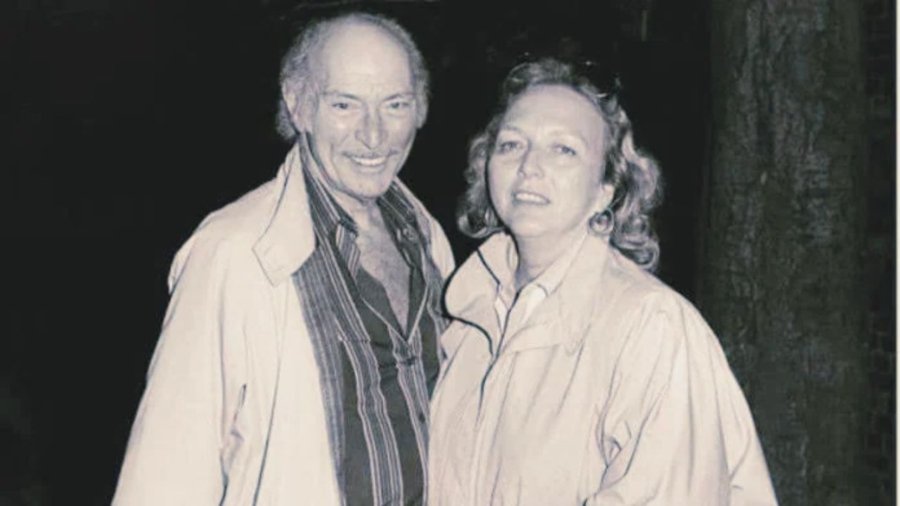
When film fans or researchers look into Lee Van Cleef’s personal life, one name that consistently comes up is Barbara Havelone. Yet despite appearing in genealogy databases and entertainment records, detailed public information about her remains genuinely scarce.
This article covers what reliable sources actually confirm about Barbara Havelone — her marriage to Lee Van Cleef, the name variations that cause confusion in search results, and what the public record does and does not tell us about her life.
Who Barbara Havelone Was
Barbara Havelone is publicly known almost entirely through her connection to Lee Van Cleef, the American actor famous for his work in Western films. Outside of that connection, authoritative sources provide very little independent biographical detail about her.
She appears in genealogy databases such as MyHeritage, which identifies her in a biographical summary tied to Van Cleef. IMDb also carries a profile for her, though it contains minimal standalone information. No verified birth date, birthplace, or detailed personal biography exists in any reliable public source.
It is important to frame her accurately. Barbara Havelone was a private individual connected to a public figure — not a celebrity in her own right. Some lower-quality biography websites make additional claims about her background, career, or personal life, but those claims lack independent verification and should be treated with caution.
Barbara Havelone, Barbara Hevelone, and Barbara Van Cleef — The Same Person
One reason searches about her can get confusing is that her name appears in several different forms across public records. The three most common are Barbara Havelone, Barbara Hevelone, and Barbara Van Cleef.
IMDb’s profile for her (nm11618974) explicitly lists “Barbara Van Cleef” as an alternative name. That version appears to come from her marriage to Lee Van Cleef. Genealogy sources tend to use either Havelone or Hevelone, and neither spelling has been confirmed as definitively correct over the other — both appear in public records.
If you’ve searched any of these names, you’re almost certainly looking for the same person. The variation in spelling is worth noting so readers don’t assume they’re finding different individuals when the records simply reflect inconsistent documentation.
Her Marriage to Lee Van Cleef
The clearest confirmed fact about Barbara Havelone is her marriage to Lee Van Cleef. According to both MyHeritage and IMDb, the two married on July 13, 1976.
Their marriage lasted approximately 13 years, ending with Van Cleef’s death on December 16, 1989. This made Barbara his widow, and it is largely this role that keeps her name appearing in film history research and celebrity genealogy databases.
This was Van Cleef’s third and final marriage. A quick look at his marriage history helps place Barbara’s role in context:
- First marriage: Patsy Ruth Kahle
- Second marriage: Joan Marjorie Drane
- Third marriage: Barbara Havelone (married July 13, 1976 — until his death in 1989)
Wikipedia’s article on Lee Van Cleef corroborates this sequence, and the marriage date is consistent across the more reliable sources available.
Lee Van Cleef — Why His Name Brings Hers Into View
To understand why Barbara Havelone appears in so many searches, it helps to understand who Lee Van Cleef was and why people still research him today.
Lee Van Cleef (1925–1989) was an American actor best known for Western and crime films. He had a distinctive look — sharp features, a piercing gaze, and a commanding presence on screen — that made him one of the most recognizable character actors of his generation.
He gained wide international recognition through director Sergio Leone’s spaghetti Westerns. His roles in For a Few Dollars More (1965) and The Good, the Bad and the Ugly (1966) in particular cemented his reputation abroad, especially in Europe. Those films gave him a second wave of popularity after a period of relative quiet in his career.
Van Cleef remained active in film and television through the 1980s. His cultural footprint has stayed strong, and ongoing interest in his career naturally extends to curiosity about his personal life — including his marriages. That is the most direct reason Barbara Havelone’s name surfaces regularly in search results.
Children, Family, and What the Record Does Not Confirm
A common question about Barbara Havelone is whether she and Lee Van Cleef had children together. Based on publicly available, reliable sources, the answer is that there is no confirmation of this.
Lee Van Cleef had three children, but all of them came from his first marriage to Patsy Ruth Kahle. Wikipedia’s article on Van Cleef confirms this. Public sources do not establish Barbara as the mother of any of his children.
It is also worth being careful about genealogy trees found on sites like MyHeritage. These databases often contain user-submitted family tree entries, which can be useful as starting points for research. However, they are not automatically verified, and details about siblings, parents, or extended relatives that appear in those trees should not be treated as confirmed facts without independent evidence.
The article will not speculate about Barbara’s own parents, siblings, or other relatives, because no authoritative source provides that information.
Her Possible Entertainment Credits
IMDb does list Barbara Havelone with some acting and music-department credits, including what appears to be an uncredited piano-related role. However, the available documentation for these credits is limited, and independent sources do not establish a substantial entertainment career for her.
Some websites describe her as a pianist or actress in more definitive terms, but those descriptions are not backed by strong sourcing. The responsible approach is to acknowledge that IMDb records something under her name while being clear that the details are thin and difficult to independently verify.
If you’re researching her specifically for entertainment history purposes, IMDb’s profile (nm11618974) is the best starting point, but treat it as a lead rather than a complete record.
What Happened After Lee Van Cleef Died
This is one of the most common questions readers have, and unfortunately it is also the one with the least available information. Reliable public sources do not document Barbara Havelone’s life after Van Cleef’s death in December 1989.
She was his widow, and that is the last clearly confirmed detail in the public record. Whether she remarried, continued any involvement in the entertainment world, or simply returned to private life is not something that responsible sources currently answer.
For anyone researching celebrity biographies, genealogy, or entertainment history, resources like OpenBusinessGoal can offer context about how to evaluate and interpret public records responsibly — which matters especially when the subject is a private individual connected to a famous name.
Speculation about her later life would not be appropriate here, and any website that claims to know details about her current status should be approached with healthy skepticism unless it cites a verifiable source.
A Final Note on Reading Genealogy Records
Barbara Havelone’s story highlights a situation that comes up often in celebrity research. When a private person is connected to a famous name, they can appear across dozens of databases and websites — but that visibility does not always translate to actual biographical detail.
MyHeritage, IMDb, and Wikipedia are all useful tools, but each has limits. MyHeritage may index a name without providing a full independent biography. IMDb documents credits but does not function as a personal archive. Wikipedia’s coverage of Van Cleef himself is solid, but Barbara appears only in the context of his marriages.
Taking these sources together gives a reasonable picture: Barbara Havelone was Lee Van Cleef’s third wife, they married in 1976, the marriage ended with his death in 1989, and she was not the mother of his known children. Beyond that, the public record is quiet — and that quiet should be respected rather than filled with guesswork.
Read Also: